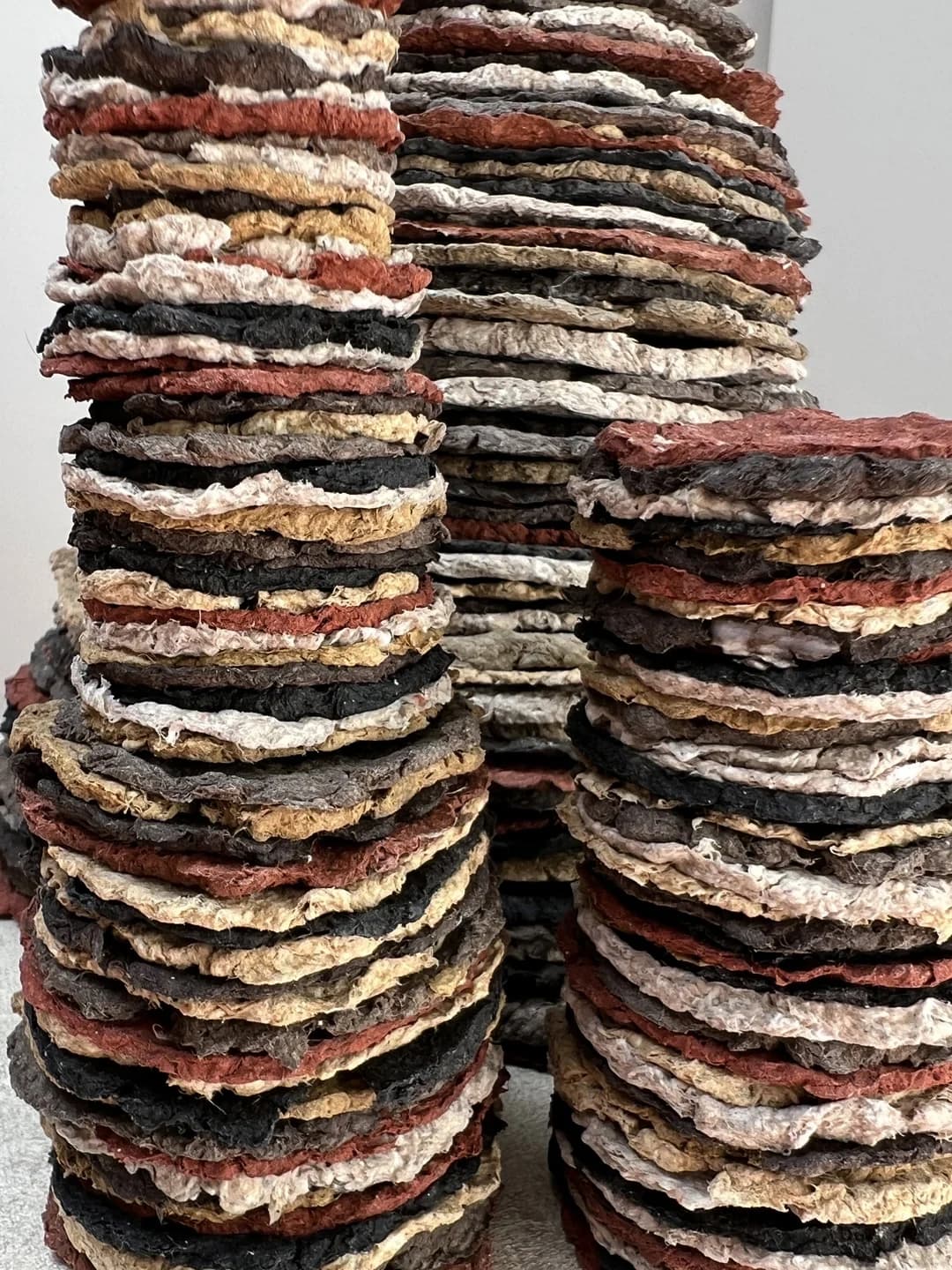
What passes, remains. Something else begins here.
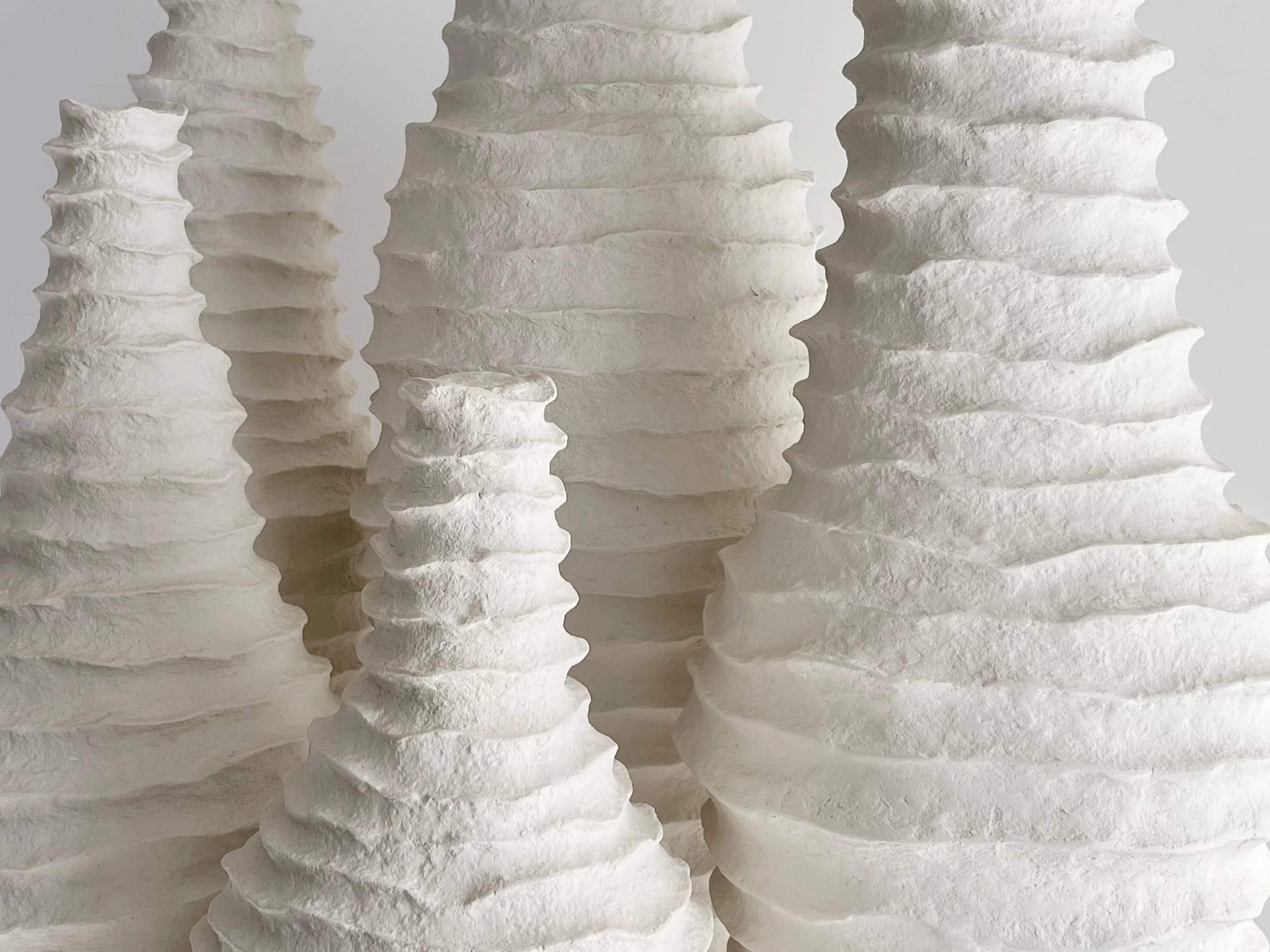
I’m not interested in paper for what it is. I’m interested in what it can become.
PAPEL is an authorial sculptural practice that starts with paper as a material and explores its potential to become something else.
What paper can become


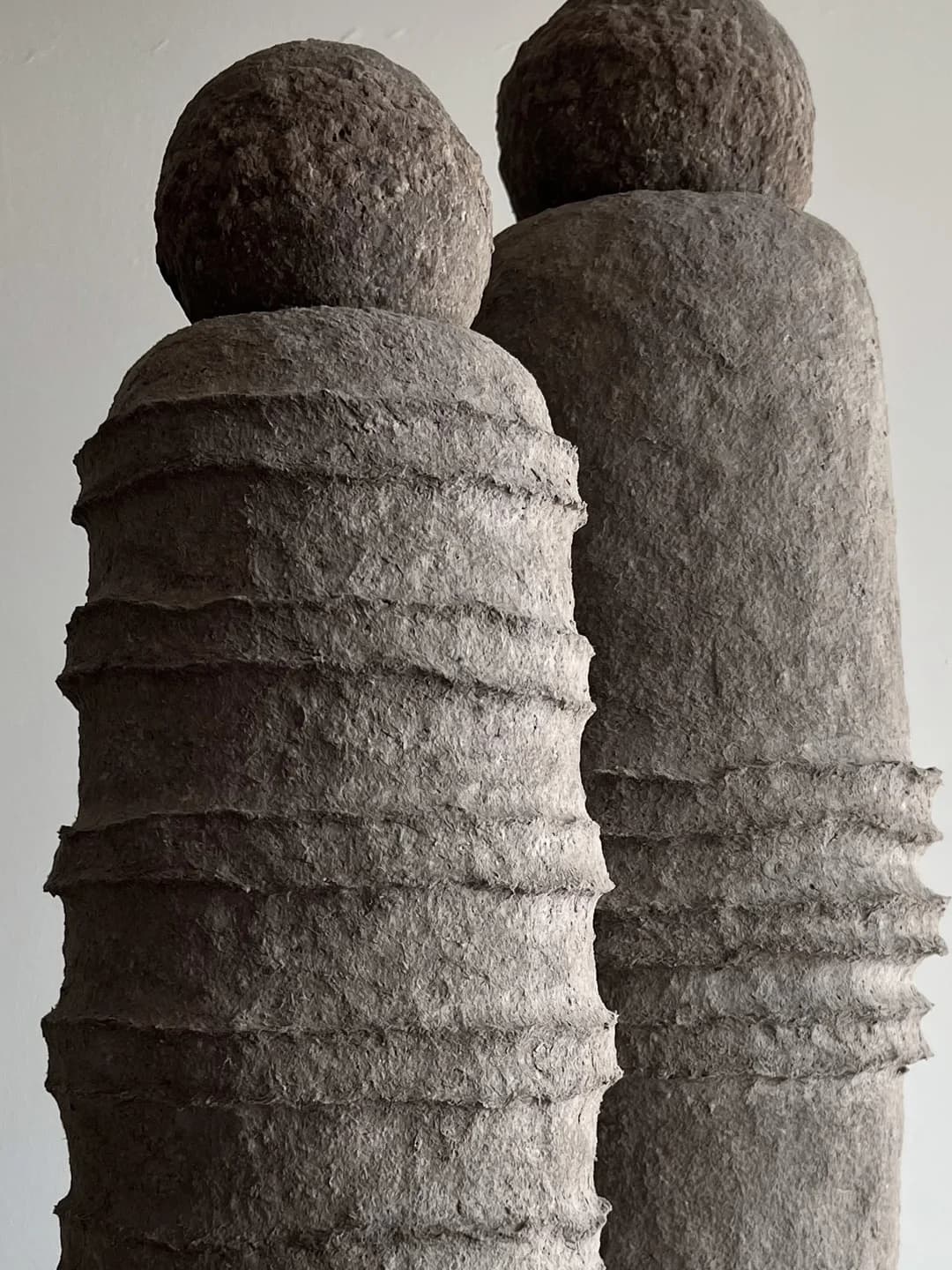
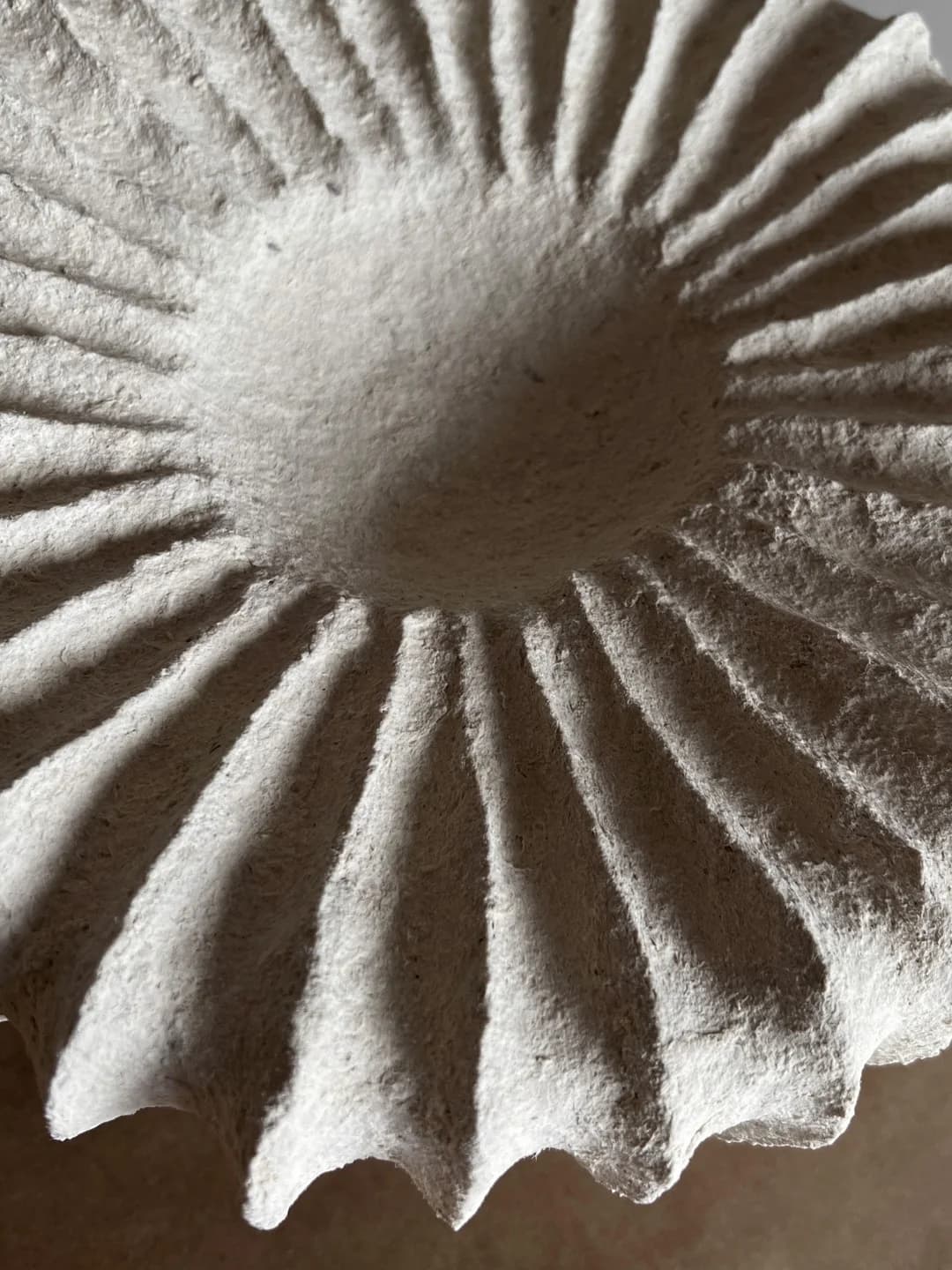
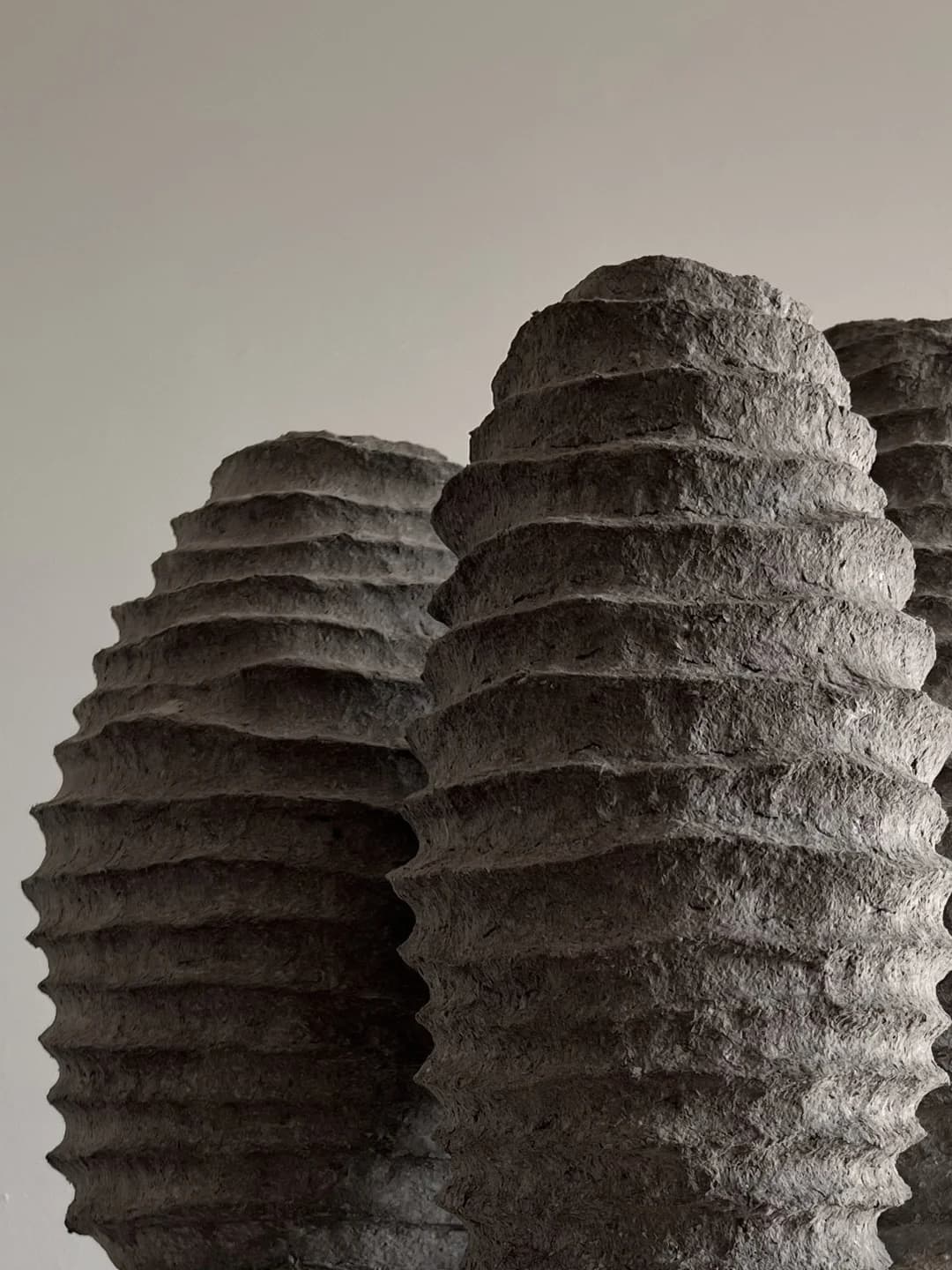
PAPEL develops an artist-developed composite based on paper fibres. Paper is not the end point, but the beginning. Through a process of transformation, it changes its structure, density and character, opening the possibility for a material with different properties and sculptural potential. The material changes through different stages of treatment, evolving from raw paper remnants into a compact mass capable of taking on, retaining and building sculptural form. This process is part of PAPEL’s artistic language. The surface does not conceal the path the material has taken. The changes that occur throughout the process remain visible. Every surface is therefore both a final layer and a record of transformation. PAPEL does not begin with a predetermined form. Form emerges through a prolonged process of shaping, drying and finishing. It develops in relation to the material, through its density, resistance, behaviour and possibilities. The material is not merely a means. It is an active part of the making of the work.

From waste to art
PAPEL is an authorial sculptural practice that starts with paper as a material and explores its potential to become something else. At the heart of the practice lies transformation. PAPEL develops an authorial process in which paper moves beyond its conventional function and becomes a material capable of building form, structure, and spatial presence. Through a slow, layered process of making, objects emerge that challenge the boundaries of the material and the way we perceive it. PAPEL exists at the intersection of contemporary art, design, and material research.
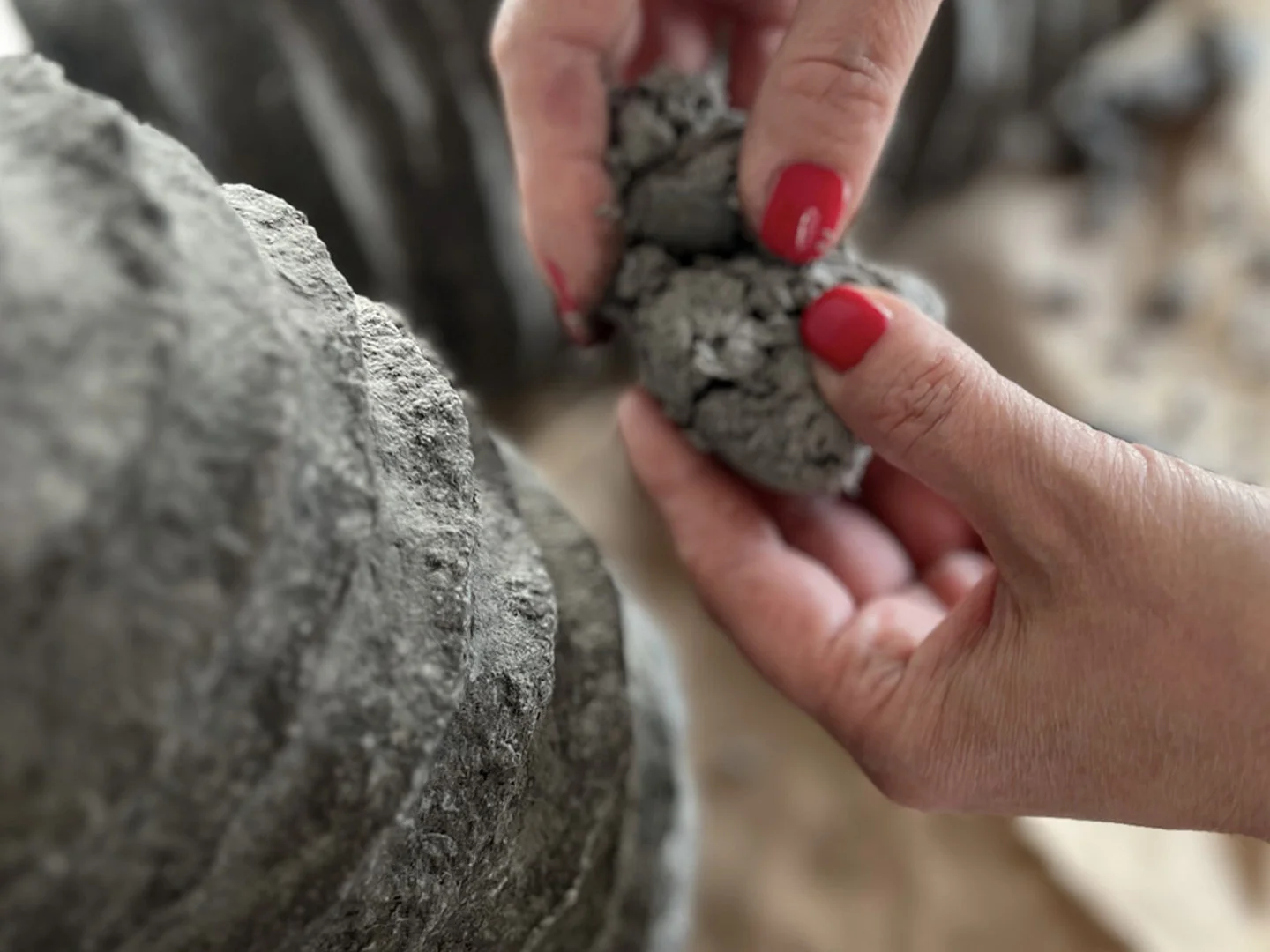
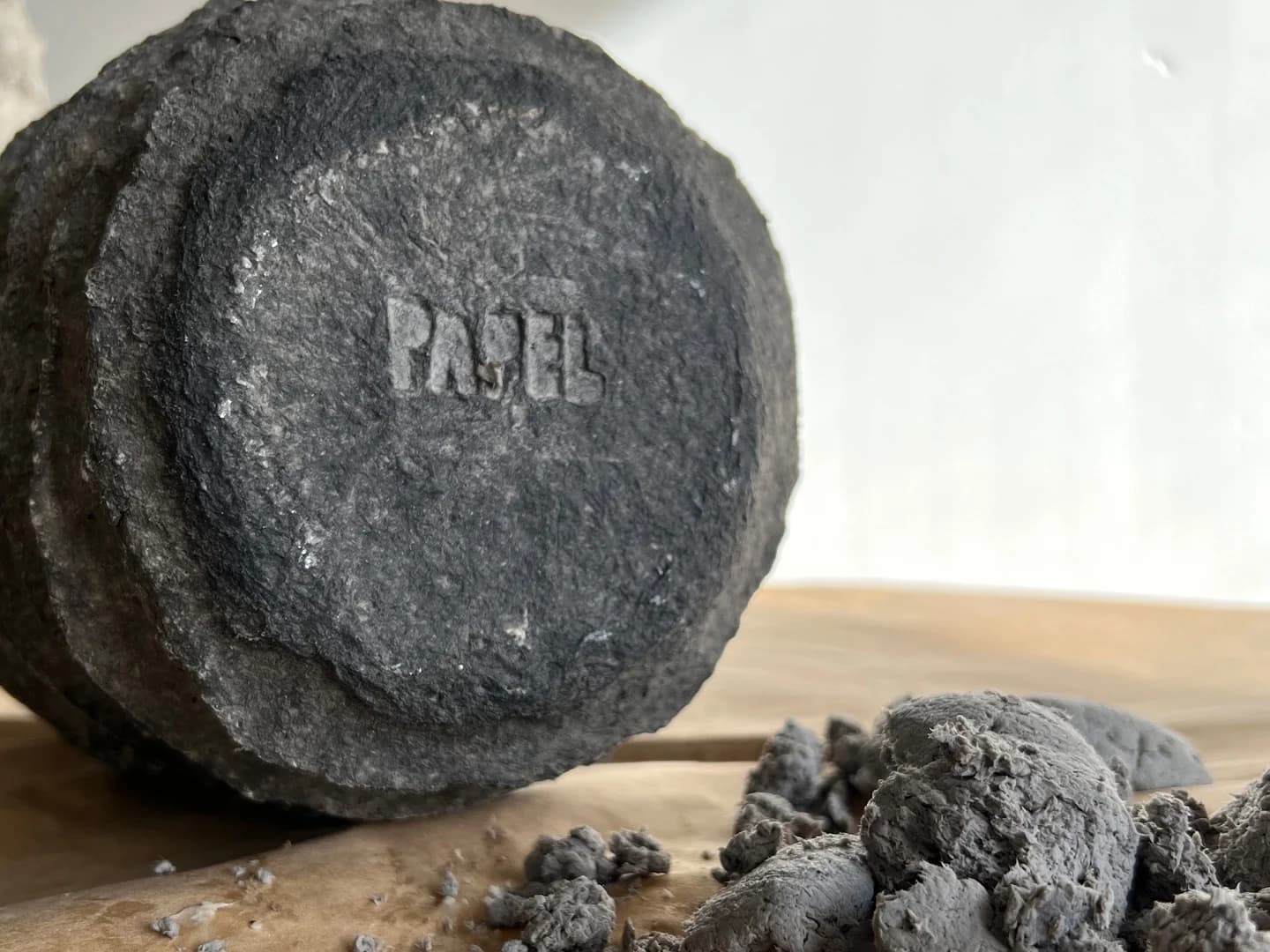
Context / Space of perception
PAPEL develops across different artistic, design, and architectural contexts. The works are presented through exhibitions, installations, and collaborations with architects and designers, opening up new ways of experiencing them. Every new environment changes the way the work is perceived. In a gallery setting, the works are encountered as a contemporary sculptural practice focused on material research. Within an interior, they enter into dialogue with their surroundings as autonomous objects or spatial interventions. PAPEL has so far been presented through a solo exhibition, group exhibitions, and international biennials, alongside features and interviews in publications dedicated to design, interiors, and materials.
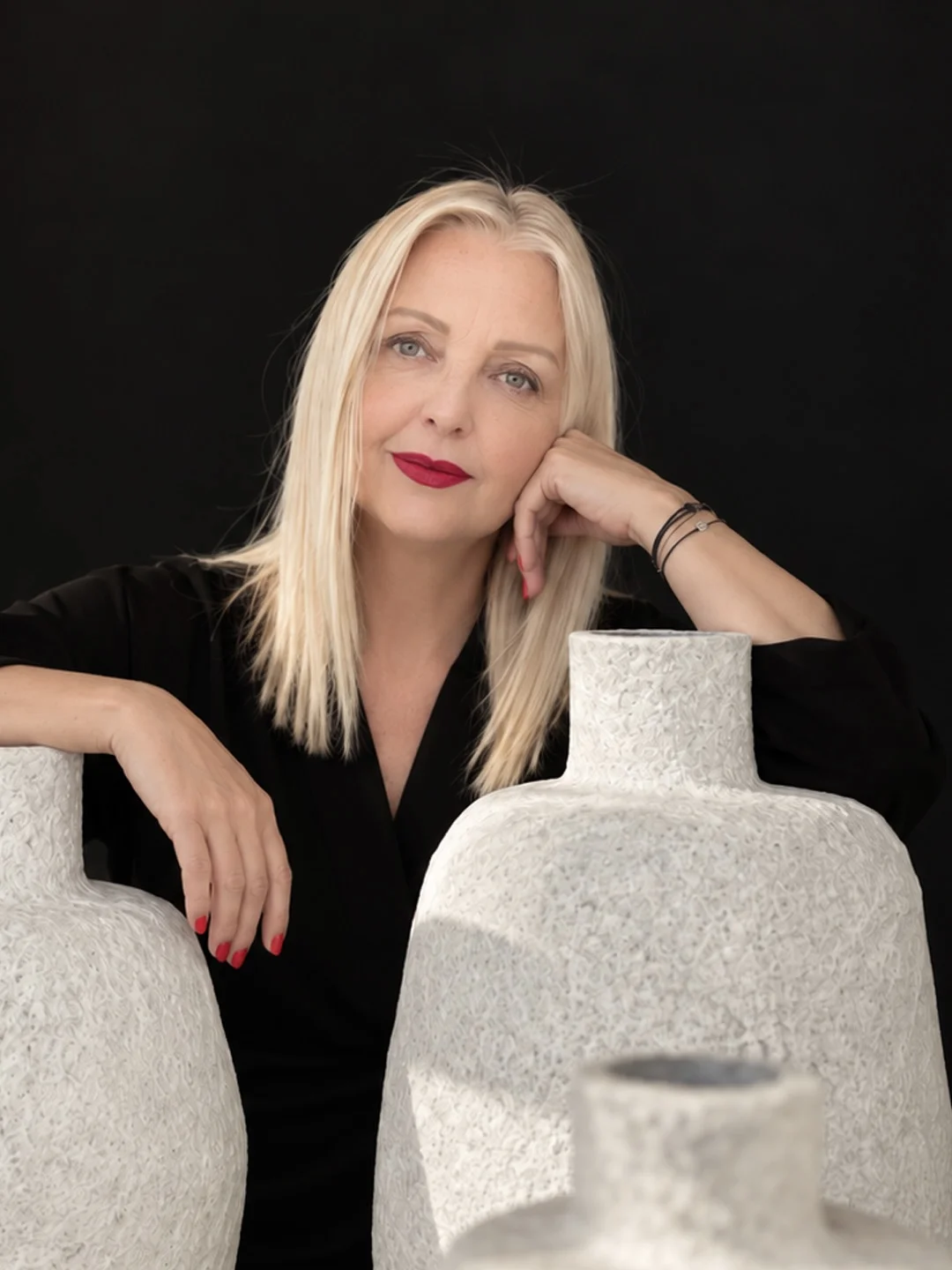
Milica Stanišić is a designer and artist based in Belgrade. More than two decades of experience in design and visual communications have shaped her sensitivity to form, systems, and the relationships between elements. Over time, her work expanded from the visual realm into material and spatial exploration, opening a new direction in her artistic practice. PAPEL emerged from this shift. Through PAPEL, she connects her experience in design with an exploration of the boundaries between material and process. She develops her own composite and working method through which paper acquires a new sculptural presence.